

Synchronous Motor vs Induction Motor: A Complete Comparison
Introduction
The first step in selecting any motor is determining its power supply — AC or DC. This divides the options into two main categories: AC Motors and DC Motors, eliminating any that don't match your electrical supply. Since both categories contain many types of machines, this article focuses on further differentiating the AC motor category. AC motors can be divided into synchronous motors and induction motors, and this article provides a brief description of both, along with a comparison of their operating characteristics and applications.
Induction Motors
Induction motors are considered one of, if not the most, widely used AC motors in industry today. As one of the earliest motor inventions, they have had ample time to be optimized for a broad range of applications. They feature a relatively simple structure, consisting of an external stator and an internal rotor that interact through electromagnetic induction to produce mechanical rotation.
Specific types of induction motors achieve this rotation in different ways, but in general, the goal is to pass alternating current through a coil in the stator to produce a magnetic field. The frequency of oscillation of the AC power supply causes this field to rotate. This rotating magnetic field (RMF) then induces an opposing magnetic field in the rotor — a free-moving armature attached to the output shaft — and drives useful rotation.
Synchronous Motors
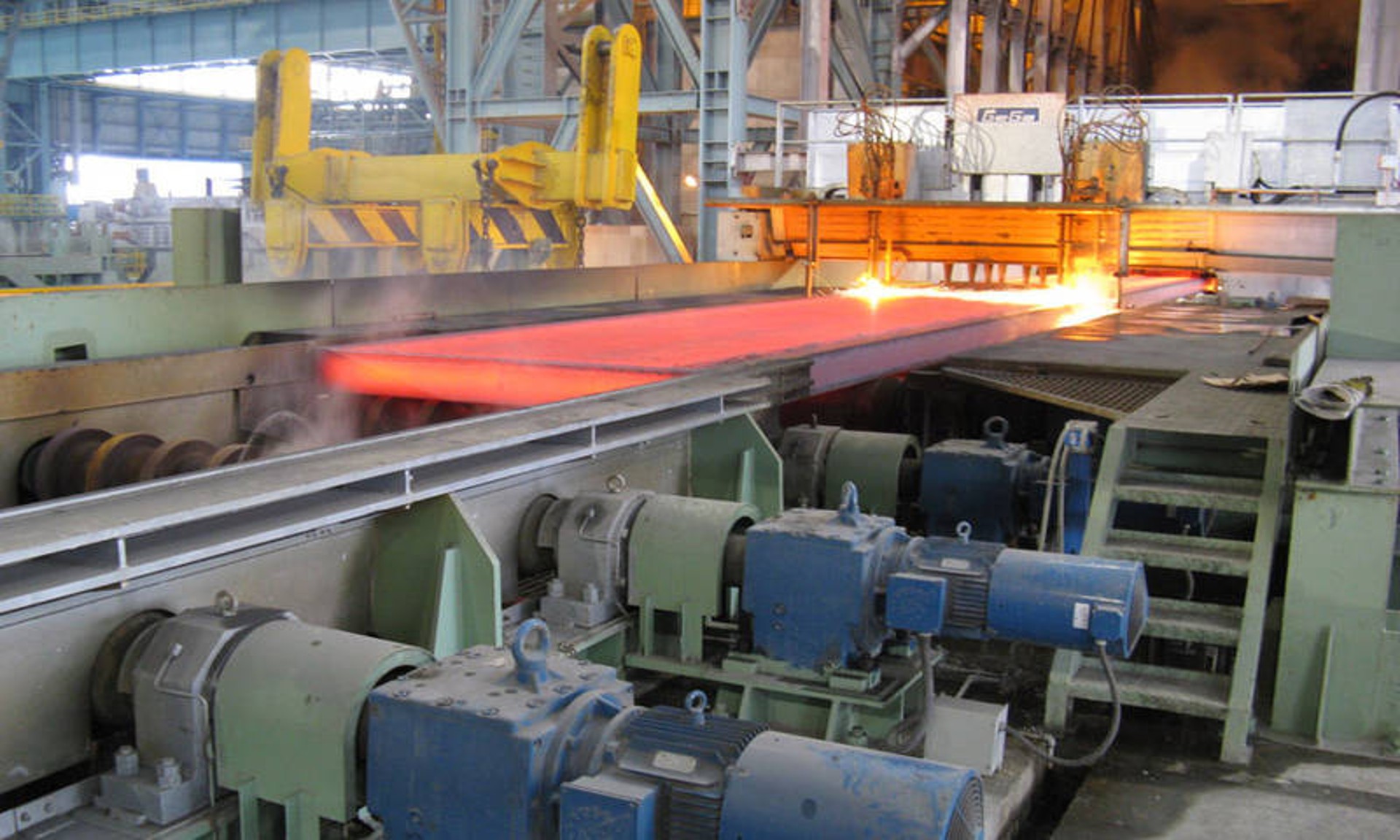
Synchronous motors cover the ground that induction motors cannot — namely, their "asynchronous" nature. Synchronous motors match the output rotational frequency precisely to the input AC frequency, allowing designers to use them for precision timing applications such as clocks, rolling mills, record players, and more. They accomplish this by magnetically locking the poles of the stator and rotor so that the stator's RMF drives the rotor at a precisely synchronized speed.
Synchronous motors are not inherently self-starting — they typically require a motor starter to excite their rotors to full speed. These starters are generally unnecessary for induction motors, which can start from standstill without an initial "kick." Additionally, although synchronous motors run at a fixed synchronized speed, changing that speed is difficult and requires an AC motor controller. While typically more expensive than induction motors, synchronous motors are more efficient and are the preferred choice for crushers, mills, grinders, and other low-speed, high-power applications.
Synchronous Motor vs Induction Motor: Key Differences
Complexity & Cost
The simplicity of induction motors is their biggest advantage over synchronous designs. They are straightforward to manufacture, operate, and maintain, which is why induction motors are significantly cheaper. Conversely, synchronous motors require more complex rotors that are harder to manufacture and maintain, plus additional circuitry that must be purchased and installed for efficient operation.
Self-Starting Capability
Induction motors are usually self-starting, while synchronous motors are not. This means induction motors require fewer peripherals to operate efficiently, further reducing cost and complexity.
Power Density
Power density refers to the amount of power produced per unit of motor volume. Synchronous motors typically have a higher power density than induction motors of the same size, allowing them to deliver more power in a smaller volume. This is especially useful for size-constrained applications and is a key reason for choosing synchronous motors over induction motors.
Efficiency
In some cases, synchronous motors can achieve efficiencies exceeding 90% and are often more energy-efficient than induction motors. While efficiency depends on the specific motor type and size, synchronous motors have no slip, meaning less energy is lost in the conversion between electrical and mechanical energy.
Price & Total Life Cycle Cost
A recurring theme between synchronous and induction motors is their price gap. For the reasons outlined above, synchronous motors cost more to produce, implement, maintain, and repair than induction motors. However, it can be argued that their energy savings and power factor correction capabilities can offset their higher initial costs. Whether or not this holds true ultimately depends on the specific application, but it should always be considered — the total life cycle cost should be kept to a minimum in any project.