AC Motors and DC Motors: A Comparative Analysis
What is an AC Motor?
An AC motor is a motor that converts AC electrical energy into mechanical energy. There are two main types: asynchronous motors and synchronous motors. In an asynchronous (induction) motor, the stator consists of multiple windings, while the rotor (squirrel-cage or wire-wound) consists of a closed circuit of conductors. Alternating current is supplied to the stator, which produces an alternating magnetic flux called the rotating magnetic field. According to Faraday's law of induction, this flux produces an induced current in the rotor. The induced current is opposite to the magnetic field and begins to rotate in its direction. Induction motors, whether single-phase or three-phase, therefore work according to the principle of electromagnetic induction between the stator and rotor.
What is a DC Motor?
A DC motor is a motor that converts DC electrical energy into mechanical energy. The basic principle of its operation is that "when a current-carrying conductor is placed in a magnetic field, it is subjected to a mechanical force perpendicular to the direction of the magnetic field and the current". The direction of the force is determined by Fleming's left-hand rule. The armature of a DC motor consists of a number of conductor windings and is placed in a housing made for a permanent magnet that generates a magnetic field. The armature carries DC power through any DC source, such as a battery. The magnetic field interacts with the current-carrying conductors of the armature, subjecting it to mechanical forces.
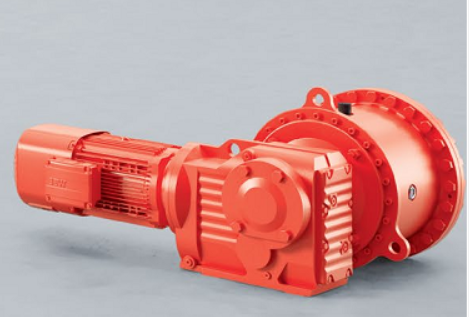
In a BLDC (brushless DC) motor, the stator consists of a number of coils which surround a rotor armature made of permanent magnets. A thyristor is used to change the direct current into three-phase alternating current, which is supplied to the stator coils to produce a rotating magnetic field. In this type of motor, the input is applied to the stationary part, so there is no need for brushes or commutators. This helps to improve the performance and efficiency of the motor.
Applications
AC motors are the most commonly used motors in domestic and industrial applications such as drills, pumps, fans, washing machines, and blowers. DC motors are used in applications requiring precise position control and high torque, such as lifts, cranes, and conveyors. Because DC motors require frequent and expensive maintenance, they are generally more expensive than AC motors.
AC Motors Vs. DC Motors
The choice between an AC and DC motor depends heavily on the specific application's requirements, including power needs, speed control precision, maintenance considerations, environmental factors, and budget. While DC motors historically dominated applications requiring precise speed and torque control, advancements in AC drive technology (VFDs) have increasingly allowed AC motors to compete in these areas, often with the added benefits of lower maintenance and higher reliability.
| Feature | AC Motors | DC Motors |
|---|---|---|
| Power Supply | Alternating Current (AC) | Direct Current (DC) |
| Construction | Generally simpler (especially induction motors), no brushes/commutator (except some specialized types) | Brushed types: brushes and commutator; Brushless types: electronic controller |
| Maintenance | Lower (fewer wearing parts) | Higher (for brushed types due to brush wear); Lower for brushless |
| Speed Control | More complex (requires VFDs) | Simpler (by varying voltage or electronic commutation) |
| Starting Torque | Can be lower (for basic induction motors) | Generally higher (especially for brushed DC) |
| Efficiency | High, especially for large industrial types | High (especially BLDC); Lower for brushed DC due to friction |
| Cost | Generally lower for a given power rating | Higher, especially BLDC due to electronics |
| Durability / Lifespan | High, longer lifespan | Lower for brushed (brush wear); High for brushless |
| Noise & EMI | Generally quieter, less EMI | Can be noisy and generate EMI (brushed types) |
| Applications | Industrial machinery, home appliances, fans, pumps, compressors, large-scale power | Robotics, electric vehicles, precision control, battery-powered devices, medical equipment, and small tools |